Decision Making

German Tank Problem

The German tank problem is about the math that helped the Allies in WW2 to estimate the number of German tanks (panther) based on the ‘samples’, i.e., the ones captured. In a war, an accurate estimate of the maximum number of tanks on the enemy side helps estimate the size of the threat.

The Allies discovered that the components of the tanks had sequential serial numbers. Then they assumed that the probability of finding any tank from #1 to #N (the maximum) was equally distributed (uniform distribution) at 1/N. The serial numbers of the captured tanks then gave them the samples.

Imagine at some stage, the following five tanks were captured: 15, 47, 79, 28, 39. Organising them in increasing order, we get 15, 28, 39, 47, 79. We will consider them as random draws from the uniform distribution and calculate the gaps between them without taking the numbers themselves. They are 14, 12, 10, 7 and 31. The average of these gaps = 14.8. Add this correction factor to the maximum number 79 to get 94.

If m is the highest number, k is the number of tanks captured, and N is the (unknown) total number,

N = m + m/k – 1

Reference

German tank problem: Wiki

German Tank Problem Read More »

Tennis Player’s Dilemma

An upcoming tennis player can win a prize if she wins two consecutive matches in a three-game series against the #1 and #2 players alternately. She can choose either of the matchups: 121 or 212. Which scheme has a better chance of winning the prize?

Let p1 be her chance to defeat #1 and p2 to beat #2; p1 < p2 (#1 is a better player than #2).

Matchup 121

The probability of winning two consecutive matches in the 121 scheme is: p1 x p2 x p1 + p1 x p2 x (1-p1) + (1-p1) x p2 x p1 = p1p2(2 – p1)

Matchup 212

The probability of winning two consecutive matches in the 212 scheme is: p2 x p1 x p2 + p2 x p1 x (1-p2) + (1-p2) x p1 x p2 = p1p2(2 – p2)

Therefore, it reduces to a comparison bewteen p1p2(2 – p1) vs p1p2(2 – p2) or (2-p1) vs (2-p2).

Since p1 < p2, (2-p1) > (2-p2). So she must go for matchup 121.

Reference

Fifty Challenging Problems In Probability: Frederick Mosteller

Tennis Player’s Dilemma Read More »

Flippant Juror Problem

There are two systems of the jury. The first is a 1-member jury with a probability p to deliver the correct verdict. The second system is a 3-member jury that works on majority (at least 2) decisions to win. The two members each have an independent probability, p, for making the correct decision, and the third juror flips a coin and decides. Which jury has a better chance of making the right decisions?

Take the case of the 3-member jury:

The probability of getting the majority right = P(all three right) + P(first two correct AND third wrong) + P(first and third right AND second wrong) + P(second and third right AND first wrong)

= p x p x 1/2 + p x p x 1/2 + p x 1/2 x (1-p) + p x 1/2 x (1-p)

= (1/2) x (p2 + p2 + p – p2 + p – p2)

= 2p/2 = p = probability of 1-member jury to make the correct decision.

Flippant Juror Problem Read More »

Flipping Biased Coins

After a break, we are back with coin-flipping games. Here is the first – A biased coin produces heads 70% of the time. You toss the coin twice. If both tosses have the same outcome, what is the probability that both tosses are tails?

Let’s apply the general form of Bayes’ equation straightaway.

P(TT|Same) = \frac{P(Same|TT) * P(TT)}{P(Same|TT) * P(TT) + P(Same|HT) * P(HT) + P(Same|TH) * P(TH) + P(Same|HH) * P(HH)} \\ \\ =  \frac{1 * 0.3*0.3}{1 * 0.3*0.3 + 0 + 0 + 1 * 0.7*0.7} = \frac{0.09}{0.58} = 0.155 \\ \\

Second one: there are two kinds of coins in a box in equal numbers – fair coins and the biased coins of the previous type (70% heads). You randomly select one and flip it twice. If it lands tails on both occasions, What is the probability that the coin is biased?

P(Biased|TT) = \frac{P(TT|Biased) * P(Biased)}{P(TT|Biased) * P(Biased) + P(TT|NOT-Biased) * P(NOT-Biased)} \\ \\ =  \frac{0.3*0.3*0.5}{0.3*0.3*0.5+ 0.5*0.5*0.5} = \frac{0.045}{0.17} = 0.265 \\ \\

Flipping Biased Coins Read More »

Republican Bayes

Let’s answer this question. In the Pew Research Center poll results published in 2010, 53% of Republicans, 14% of Democrats and 31% of Independents answered NO to the question, is there solid evidence that the earth is warming?
If a respondent answered no, what is the probability that she is a Republican? Note that on this survey on Oct 13-18, 2010, 25% of the participants were Republicans, 31% were Democrats, and 40% were Independent.

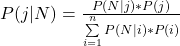
Let’s use the general formula of Bayes’ theorem here:

\\ P(j|N) = \frac{P(N|j)*P(j)}{\sum\limits_{i = 1}^{n} P(N|i)*P(i)}

Here, j represents Republican, and ‘i‘ represents a Republican, Democrat or Independent. So the required probability that a person is a Republican, given that she answered NO, is:

P(R|N) =  \frac{P(N|R)*P(R)}{P(N|R)*P(R) + P(N|D)*P(D) + P(N|I)*P(I)} \\\\ \frac{0.53*0.25}{0.53*0.25 + 0.14*0.31 + 0.31*0.4} = 0.44

So, there is a 44% chance that the random person is a Republican: no better than flipping a coin!

Increasing Partisan Divide on Energy Policies: Pew Research

Republican Bayes Read More »

Focal Point

Remember the battle of the sexes? It had two pure strategy Nash equilibria – football-football and dance-dance. And in the absence of communication, the couple could end up with those bad outcomes. So how do we prevent such results?

A focal point is a pure strategy Nash equilibrium that all the players select because of some salient feature. An example is the heads or tails game, in which two players guess, and if both pick the same, they win prizes. Results from some experiments show an overwhelming preference for heads over tails. The reason can be that it was the first choice.

In the split money game, two parties can guess any number between 0 and 100. If the sum is lower than 100, both get their respective choices. If it is greater than 100, both get nothing. The majority selects 50.

Focal Point Read More »

Keynesian Beauty Contest

Beauty Contest was the metaphor used by John Maynard Keynes in his famous 1936 work, The General Theory of Employment, Interest, and Money, to describe prices of assets in the market. Kaynes likes investment choices to a contest in a newspaper that shows 100 pictures, and the reader needs to choose six prettiest faces. The winner is the one whose preference matches the popular choice of the overall competitors.

Levels of thinking

How will a player play this game? One approach is to assign six random photos and hope it somehow connects with the average choice. It is zero-level thinking. The first-level thinker selects the pictures she likes. The rational player knows that it is not those she likes that win prizes but the ones the others like (second-level thinking). So she wants to pick what she thinks the others would select. If you go one level up, you choose the one that others think is others’ choice.

We have seen a similar contest in an earlier post describing Richard Thaler’s experiment in the Financial Times (1997). The competition was to choose a number between 0 to 100, and the person whose choice is two-thirds of the average guess gets the prize. A first-level thinker assumes that others pick numbers at random. The average of such a collection is 50, and 2/3 of 50 is 33. The second leveller knows the other participants are rational first-levellers and would guess 33. So she will choose 2/3 x 33 = 22. Following this iterative reasoning, one will end up at the Nash Equilibrium, which is zero!

The prices

In this viewpoint, Keynes hypothesises that the market prices stocks not based on their fundamentals but on what the participants (buyers and sellers) decide.

References

Keynes, John Maynard (1936). The General Theory of Employment, Interest and Money

Keynes’s ‘beauty contest’: FT

Results from experiments

Keynesian beauty contest: Wiki

Keynesian Beauty Contest Read More »

The Dropout Fallacy

Why do people go to college? To some, it is to learn. To academics and philosophers, it is more than just learning to enrich intellectual and social capital in individuals. But to many, a college education prepares them to get a job.

And there is nothing wrong with that thought – there is a strong positive correlation between jobs and education. Here is data from the U.S.  Bureau of Labor Statistics: 

Degree Median
Salary (USD)
Unemployment
Rate (%)
Doctoral 19091.5
Professional 19241.8
Master’s15742.6
Bachlor’s13343.5
Associate’s9634.6
College, no degree8995.5
High School8096.2
Less than
High School
6268.3
Unemployment Rates and Earnings by educational attainment, 2021
Note: Data are for persons aged 25 and over. Earnings are for full-time wage and salary workers.
Source: Current Population Survey, U.S. Department of Labor, U.S. Bureau of Labor Statistics

But only until you encounter the superheroes – the Gates, the Dells and the Jobs – the college dropouts! The countless stories and speeches reinforce the theme that dropouts counterbalance their short-coming in education through their determination, superior intelligence and perseverance.

There can be a lot of factors behind the observation of successful dropouts. Foremost among them is randomness: out of the millions that have a chance but fail to complete their college, a negligible few happen to become millionaires. And they get more airtime in public. In that respect, the dropout fallacy is a survivorship bias.

The second invisible factor is related to the confounding effect of the social and cultural capital of the prosperous – such as access to a network of successful people, easy access to financing their ventures etc.

References

Unemployment Rates and Earnings by educational attainment, 2021: U.S. BLS
The Myth of the Successful College Dropout: The Atlantic

The Dropout Fallacy Read More »

Free and Unlimited

The concept of FREE! is one of the most compelling forces on human irrationality. Based on many examples, it has been proven that the market power of FREE! is not an extrapolation of discount.

In a famous experiment by Shampanier et al., the researchers offered to the participants a choice between Hershey’s (low-value chocolate) and Lindt truffle (high-value) for three different price offers – (0&14), (1&15) and (0&10). The first number inside the bracket refers to the price of Hershey’s in cents, and the second is that of Lindt. And the results showed the demand for Lindt dropped from 36% to below 20% in both the FREE! options and that of Hershey’s went up from 14% to 40%. Note that 40-50% of the participants opted for nothing.

In the real world, the appeal to free and unlimited has been hailed as a blockbuster success story behind India’s Jio telecom company. When it was launched for the public in September 2016, Jio SIM cards were available for free, along with 4GB of data a day, for three months. And the results? The Indian telecom industry, which had six players at that time, was reduced to four, and Jio captured about 350 million subscribers today.

Dan Ariely, Predictably Irrational

Shampanier et al., Zero as a Special Price: The True Value of Free Products, Marketing Science, 26 (6), 2007, 742

Free and Unlimited Read More »

The Stupidity paradox

The stupidity paradox is a term introduced from the works of Mats Alvesson, Professor of Business Administration Mats Alvesson at Lund University, Sweden and Andre Spicer, Professor of organisational behaviour, City University London. As per the theory, functional stupidity is a state where employees in an organisation perform as expected but never question if they are doing the right thing or not.

As per the authors, the stupidity paradox happens when companies that claim to be knowledge-based recruit smart, educated staff but end up doing dumb things.

The Stupidity paradox Read More »